Hip Spica Cast Care After Treatment for Developmental Hip Dysplasia
A practical guide for families on diaper changes, skin checks, keeping the cast dry, safe transport, and when to seek urgent help.
Content updated:

What is a hip spica cast?
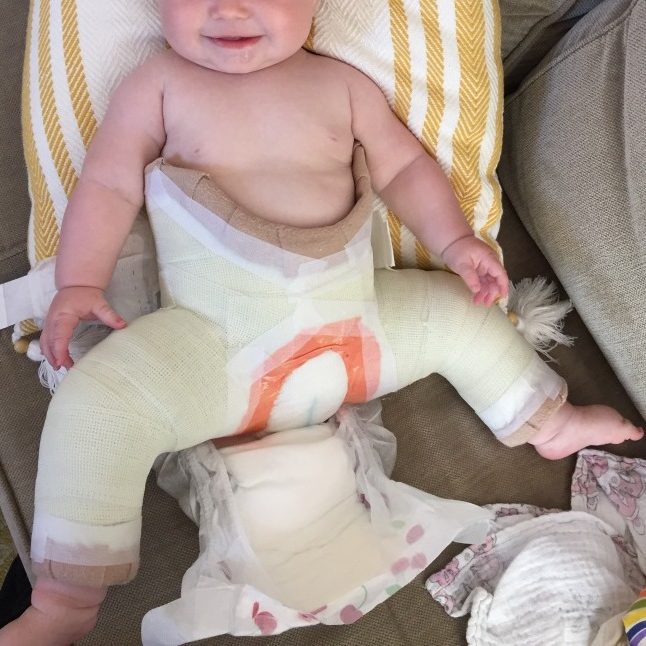
A hip spica cast keeps the hip in position after reduction in some children with developmental dysplasia of the hip (DDH). It surrounds the pelvis and lower trunk and extends down one or both legs. An opening allows diapering or toileting. Your surgeon sets the schedule for imaging, cast changes, and removal. The illustration shows possible cast shapes. Illustration by BruceBlaus via Wikimedia Commons, CC BY-SA 4.0, original image unmodified.
Before you leave the hospital
Ask the nurse to demonstrate diapering, lifting, and repositioning, then practice with the nurse. Confirm the type of lining and the instructions for sleep, movement, weight-bearing, and pain relief. Have the car seat checked before the ride home. Save the orthopedic team's daytime and after-hours contact information and the follow-up date.
Changing a diaper, step by step
1. Gather a small diaper, a larger diaper, and a soft cloth. Use a stable, low surface and stay with your child. 2. Remove the soiled diaper, gently clean the exposed skin, and dry it without wetting the cast lining. 3. As shown by the care team, place the small diaper in the opening with its absorbent side facing the skin. Gently tuck the edges in front and back without bunching or packing the material. 4. Put the larger diaper over the cast to hold the smaller one in place. Check often and change it as soon as it is wet or soiled. Follow your team's day and night schedule. If leakage keeps happening or urine or stool reaches the lining, contact the orthopedic team. For toilet-trained children, ask the team to demonstrate a suitable toilet setup, urinal, or bedpan.

Bathing, cleaning, and keeping the cast dry
Wipe exposed skin with a damp cloth and dry it well. Give sponge baths and keep the cast away from water unless your team confirms that the lining is waterproof and explains how to wash it. Keep scratching tools, powders, and creams out of the cast. Do not trim or alter its edges. Call the orthopedic team if the lining gets wet, the cast softens, cracks or loosens, or an object falls inside.
Checking skin and toes
Look at exposed skin around the abdomen, groin and ankles daily and during diaper changes or repositioning. Watch for persistent redness, blisters, sores or drainage. Check toe color, warmth, swelling and movement against your child's usual appearance. Seek emergency care for pale, blue or cold toes, or a new loss of toe movement.
Positioning, sleep, and lifting
Change your child's position regularly according to the team's schedule to relieve pressure on the skin. While your child is awake and supervised, use the supports your team recommends and keep the cast's weight off the heels. Use tummy time only while awake, with direct supervision and team approval. Before discharge, ask for a safe sleep plan for your child's age and cast shape. When lifting, support the trunk, cast and legs together. Never lift by the armpits alone or by the bar between the legs. Follow the surgeon's instructions for standing, walking and weight-bearing.
Car travel, feeding, and follow-up
Your child may need a car seat or restraint that accommodates the cast. Ask the team to assess and fit it before discharge. Never travel with your child on someone's lap or unrestrained, and do not alter the seat straps yourself. Offer meals in a supported position suitable for swallowing, as advised by the team, and give pain medicine as prescribed. Contact the team if constipation persists or vomiting recurs. Attend scheduled follow-up and imaging even if your child seems comfortable.
When should I contact the orthopedic team the same day?
Call for a sore, blister, or redness that does not settle after repositioning, drainage or an unusual odor from inside the cast, or an unexplained fever. Also call if the lining is wet or soiled, the cast cracks, softens or loosens, or the toes slip back into the cast. If you cannot reach the team or symptoms worsen, seek urgent assessment. Follow your child's discharge instructions, which account for the operation and cast type.
Medical references (7)
- Royal Children’s Hospital Melbourne — Hip spica plaster
- Children’s Hospital of Philadelphia — Caring for a child in a hip spica cast
- Pediatric Orthopaedic Society of North America — OrthoKids: Spica Casts
- International Hip Dysplasia Institute — شرح مصوّر لتغيير الحفاض / Spica cast diapering
- رسم جبس الحوض / Hip Spica Casts — BruceBlaus, Wikimedia Commons
- ترخيص رسم جبس الحوض / Illustration license — CC BY-SA 4.0
- رمز الحفاض / Diaper pictogram — Health Icons contributors, CC0