Developmental dysplasia of the hip
Hip dysplasia may have no obvious symptoms. Early assessment helps guide treatment.
Content updated:
Educational draft — awaiting physician approval
What is it?
The hip has a ball at the top of the thighbone and a socket around it. In developmental dysplasia, the socket may be shallow or the joint unstable. The ball may sit partly or completely outside it. Not every child has a full dislocation.
Why does screening matter?
Babies may have no obvious signs. Breech birth or family history makes assessment especially important. Examination may be followed by ultrasound in younger babies or X-rays later. Unequal leg lengths, restricted hip movement or a limp need review.
How is it treated?
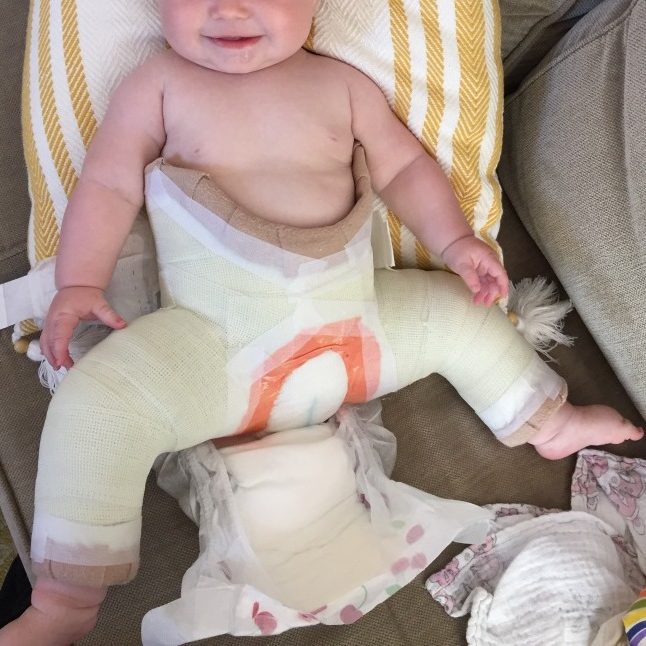
Treatment depends on age and stability: a harness, repositioning with a body cast, or surgery. Follow-up monitors hip development. Avoid tightly swaddling straight legs, and do not adjust a treatment harness without the care team.