
My child’s feet turn inward when walking: when should we get them checked?
In-toeing describes the direction the feet point during walking or running. A child's heels can still touch the floor normally. This is different from toe walking.
Content updated:
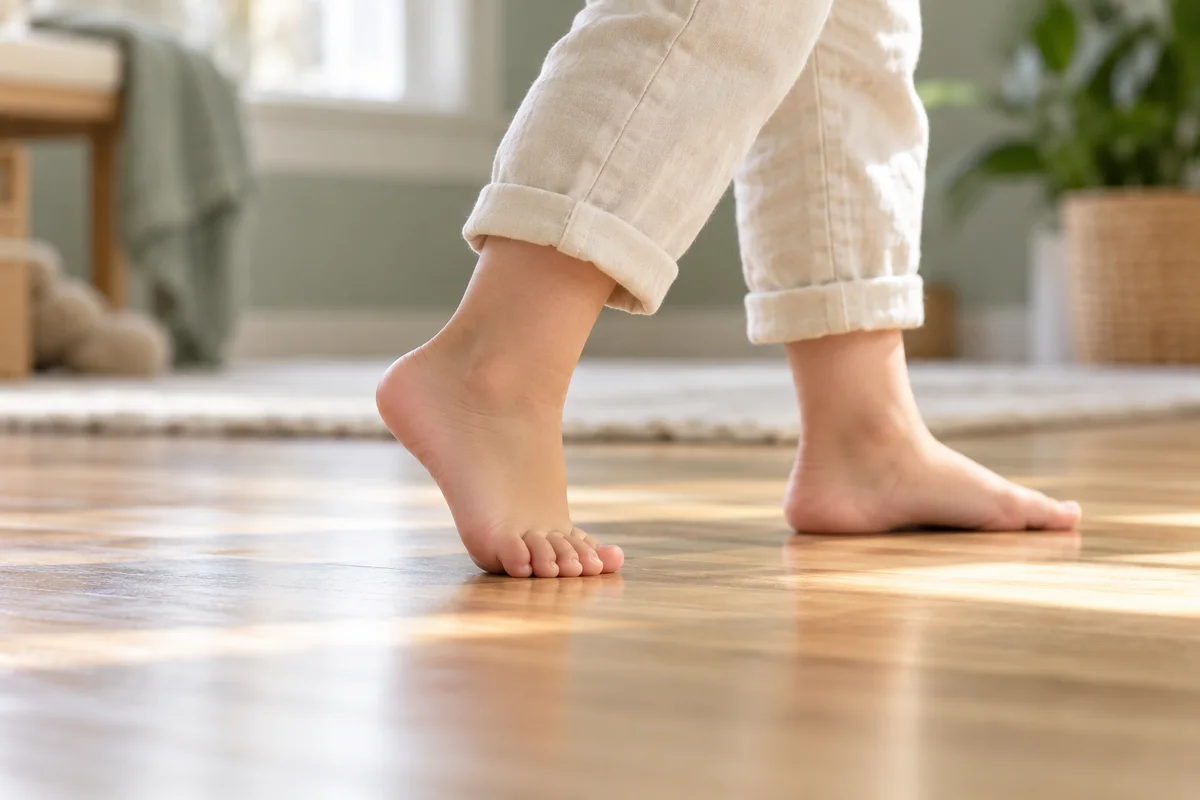
Illustrates movement only; it is not a diagnostic image.
Where does the inward turn come from?
The inward turn may come from a curved forefoot in a baby, an inward twist of the shin in a toddler, or rotation at the thigh in an older child. With the latter two, the foot itself can look straight. The age at which you first noticed the gait helps guide the examination.
What happens as children grow?
A painless inward gait often improves gradually over several years. Feet may catch each other during running, but most children can join their peers in play. Corrective shoes or twisting exercises do not speed up the usual growth-related changes in the shin or thigh.
How is the gait assessed?
The clinician watches the child walk and examines the knees, hip rotation and forefoot flexibility. Examination is often sufficient for a typical pattern. A baby's markedly curved, stiff forefoot deserves early assessment because management can differ from a flexible variation.
When should we book a visit?
Pain, swelling, limping or an increasing difference between the sides warrants evaluation. Note when it began and which activities bring it out. A short recording of ordinary walking can help you describe what you see.